
Pylon Signs in Greater St. Louis
Pylon signs elevate business or property identification for visibility along a roadway or across a larger commercial site. They are often used for shopping centers and multi-tenant properties where several businesses share one prominent identification point.
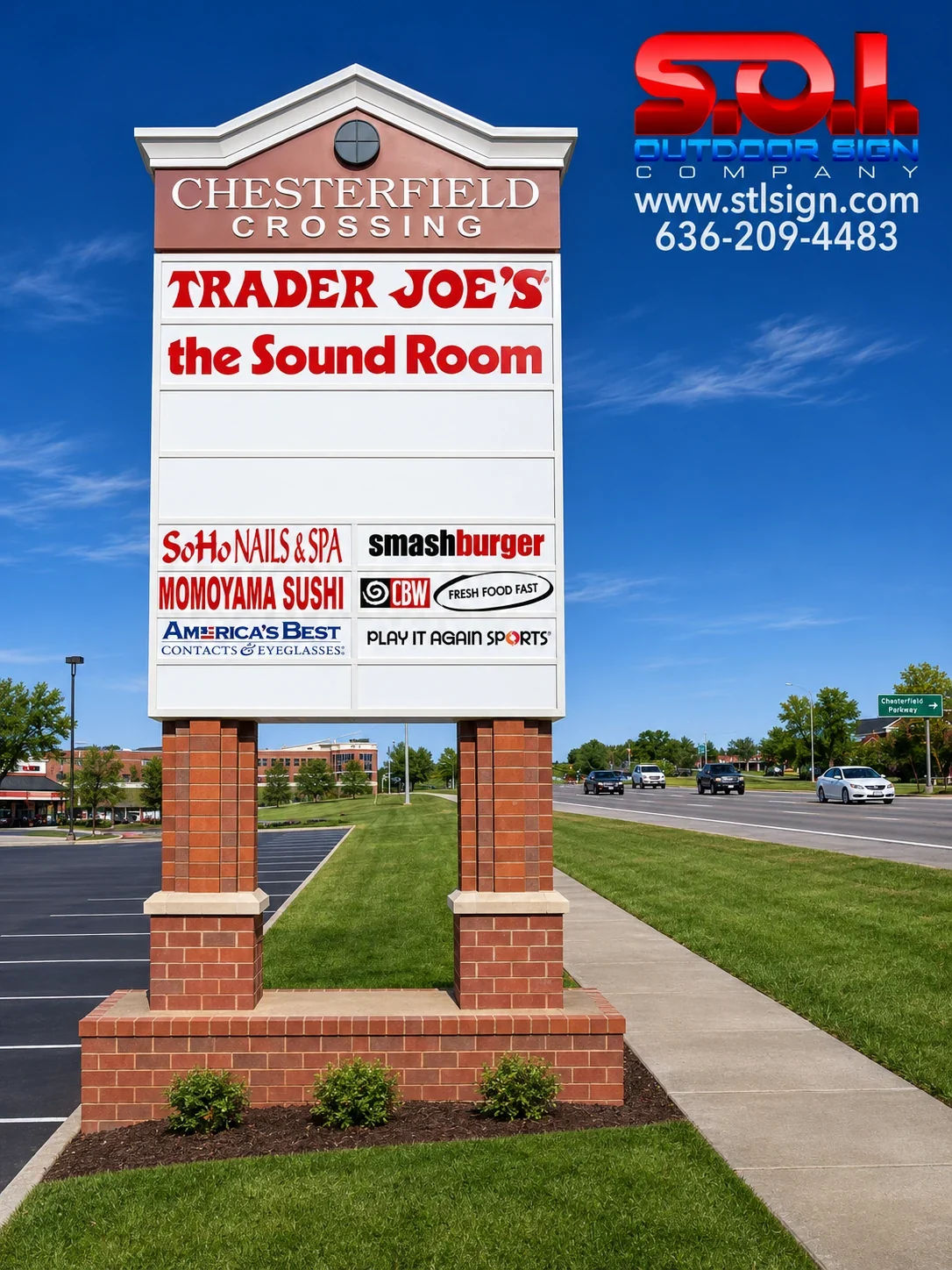
Make a tenant directory readable
A multi-tenant pylon is a hierarchy problem as much as a size decision. The property name, tenant panels and any address information need a clear order. Too many competing messages can make even a large structure difficult to read. Consider the number of tenants and likely future branding changes before approving the layout.
Plan the height and structure around the site
Height is only one part of visibility. Road speed, approach distance, nearby signs, grades and surrounding buildings matter. Structural supports and foundations are specific to the proposed sign and site; a generic drawing should not be treated as an engineered or permitted installation plan.
Coordinate a complete property sign purchase
Landlords, developers and shopping-center owners should supply site photos, the address, tenant list and any existing sign criteria. Discuss whether the project is a new property identity or a replacement of an existing freestanding sign. Approval requirements and electrical access where illumination is proposed must be established for the actual location.
Planning a sign in the St. Louis region
Share the exact project address so the applicable jurisdiction and site requirements can be identified. Landlord or association approval and municipal sign approval are separate considerations. No approval, sign dimension or installation date is assumed before the actual project is reviewed.
Questions before you request a quote
Are pylon signs and pole signs always different?
The terms can overlap in everyday use. Pylon often refers to an elevated property or multi-tenant identity, sometimes with enclosed or architectural supports; pole sign commonly emphasizes the exposed support arrangement. Review a visual example rather than relying on terminology alone.
Is a taller sign always better?
No. Visibility, legibility, site fit and local restrictions need to be considered together. A higher position cannot compensate for text that is too small or overly crowded.
Talk through your complete sign project
Send your address, photographs, artwork if available and any landlord or association criteria. Explain whether you are opening, relocating, rebranding or replacing a sign. S.O.I. can discuss the appropriate next information for your proposal.